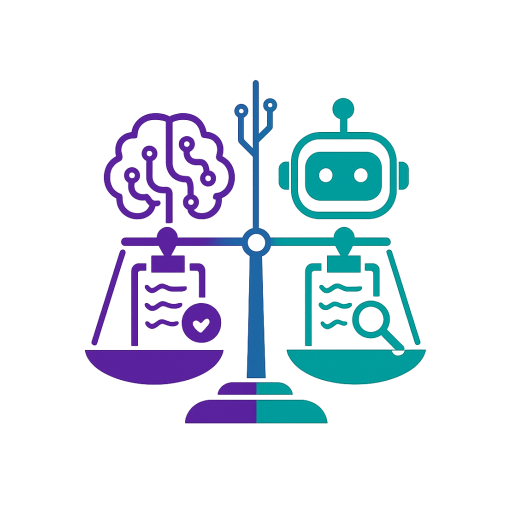

HeadSpin vs Firebase Test Lab: Device coverage or debugging depth?
By Antoine Dubois · October 10, 2026
A practical HeadSpin vs Firebase Test Lab comparison for mobile QA teams, focused on device coverage, reproducibility, logs, video, performance debugging, and CI fit.
If your team mainly needs broad app execution across many devices, Firebase Test Lab is usually the simpler answer. If the harder problem is understanding why a run failed, especially when logs, media, and environment evidence matter, HeadSpin is the more natural fit.
That is the short version. The useful question is not which platform is “better” in the abstract, but which one reduces the specific cost your team is paying today: missed device coverage, slow triage, or fragile setup.
Bottom line
- Choose Firebase Test Lab when your priority is broad device execution with low setup overhead, especially if your Android pipeline already lives in Google/Firebase tooling.
- Choose HeadSpin when your priority is deeper observability for failures, performance debugging workflows, and richer evidence for reproducing hard mobile issues.
- If you need a platform to act like a device lab first, Firebase Test Lab is the cleaner default.
- If you need a platform to act like a debugging environment first, HeadSpin is the stronger fit.
The tradeoff is simple: execution breadth lowers coverage risk, while richer telemetry lowers triage risk. You usually do not need both to the same degree on the same project.
How this comparison is evaluated
This article uses a practical rubric built around the work a mobile QA lead or release engineer actually has to do:
- Device availability, can the platform execute against enough real devices and OS combinations to make test lab coverage meaningful?
- Debugging depth, how much evidence is available after a failure, such as logs, video, network or performance signals, and environmental context?
- Parallel run efficiency, how well the platform supports running many tests without the workflow becoming the bottleneck?
- Setup overhead, how much effort is required to connect CI, configure devices, and keep the workflow maintainable?
This is an editorial comparison, not a lab benchmark. Any platform-specific claim below is limited to what its official product pages support, plus the practical implications that follow from those documented capabilities.
Decision matrix
| Criterion | HeadSpin | Firebase Test Lab |
|---|---|---|
| Device availability | Strong for managed mobile testing fleets | Strong for cloud device execution, especially Android coverage |
| Debugging depth | Strongest fit, built for observability and troubleshooting | More limited, better for execution than deep diagnosis |
| Parallel run efficiency | Good for broad fleet use cases | Good for quick scaling in CI-driven test runs |
| Setup overhead | Moderate, richer capabilities usually mean more workflow setup | Low to moderate, especially if you already use Firebase |
| Best fit | Failure analysis, performance debugging workflows, richer evidence | Broad device execution, regression coverage, CI gating |
What Firebase Test Lab is better at
Firebase Test Lab is easier to justify when the real question is, “Can we run this app against enough devices to catch compatibility issues before release?” Its role is to provide a managed environment for Android and iOS app testing, with the strongest fit on the Android side because it sits close to Firebase-based release workflows.
That matters because many mobile teams do not need a heavyweight observability layer for every test. They need fast access to device variants, a predictable CI target, and a service that does not create a maintenance burden of its own.
Strengths that matter for release pipelines
- Broad execution focus, useful when the main pain is device matrix coverage rather than deep post-failure investigation.
- CI-friendly workflow, especially for teams already using Firebase and Google Cloud-adjacent tooling.
- Lower operational friction, because a narrower service surface often means fewer moving parts to configure and maintain.
Where it can feel thin
Firebase Test Lab is not primarily positioned as a debugging cockpit. If your triage process depends on a lot of evidence, for example correlating a flaky login with device state, network behavior, and a rich failure timeline, you may end up exporting results into other tools or re-running issues elsewhere.
A coverage-first platform can tell you that a test failed on a device. It may not give you everything needed to explain the failure in one place.
What HeadSpin is better at
HeadSpin is the stronger choice when the platform is expected to help answer why a run failed, not just whether it passed. Its positioning around AI and mobile testing fits teams that care about observability, performance debugging workflows, and richer troubleshooting evidence.
That is a different job from “run the suite on a lot of devices.” It is closer to “capture enough context that a QA lead, developer, or SRE can isolate the issue without recreating the whole environment by hand.”
Strengths that matter for debugging
- Richer troubleshooting posture, which is valuable for failures that are hard to reproduce locally.
- Performance debugging workflows, useful when app behavior degrades under specific device, network, or session conditions.
- More diagnostic headroom, which can reduce back-and-forth between QA and development when the failure evidence is incomplete in simpler clouds.
Where it can be heavier
The richer the platform, the more likely you are to spend time deciding how to use its data well. That is not a defect, it is a tradeoff. A team that mainly wants a quick green or red signal may not need observability features that require additional interpretation, workflow design, or internal training.
Choose Firebase Test Lab if…
- Your primary goal is broad regression execution on real devices.
- You want an Android testing cloud that fits a Firebase-centric workflow.
- Your team prefers simple CI gating over deep device observability.
- The main pain is coverage gaps, not “I cannot explain this failure.”
- You want to keep platform overhead low and avoid building an elaborate triage process.
A concrete fit scenario
Use Firebase Test Lab when a release engineer needs a dependable service to run instrumentation tests, smoke tests, or a repeated regression pack against a device matrix before a mobile release cut. In that setup, the platform is a gate, not a forensic tool.
Choose HeadSpin if…
- Your team regularly faces hard-to-reproduce failures.
- You need logs, video, and richer session evidence to shorten debug cycles.
- Performance debugging is part of the selection criteria, not an occasional nice-to-have.
- QA, mobile development, and release engineering all need the same failure evidence without stitching together multiple systems.
- You are willing to pay for a stronger troubleshooting environment because the time saved in triage is real.
A concrete fit scenario
Use HeadSpin when a release blocks on issues like app freezes, slow startup, network-sensitive failures, or device-specific behavior that requires more than a pass/fail result. In that setup, the platform is part of the investigation workflow.
Failure modes to watch for
If you choose based on coverage alone
A team can pick a device cloud, see plenty of supported devices, and still struggle because the real bottleneck is not execution capacity. It is triage. If every failure creates a manual reproduction hunt, coverage does not fully solve the problem.
If you choose based on debugging depth alone
A team can buy observability and still underuse it if the primary need is simply to run a matrix quickly in CI. In that case, the platform may feel like overkill, especially if the team is spending effort on evidence collection it does not often consume.
If your tests are unstable before they reach the cloud
Neither platform fixes fragile test design. Locator drift, poor waits, and over-coupled test data will still create noise. A better device cloud helps you debug failure patterns, but it does not remove the need for stable test architecture.
Practical selection rule
Use this rule if you want a short answer for your team discussion:
- If the question is “Can we run this across enough real devices and keep CI moving?”, start with Firebase Test Lab.
- If the question is “Can we understand and debug this failure without a long manual reproduction loop?”, start with HeadSpin.
That is the cleanest way to separate a device lab coverage problem from a performance debugging and observability problem.
Implementation notes for teams deciding now
If you are evaluating either platform, keep the pilot small and realistic:
- Pick one release-critical test pack, not the entire suite.
- Include at least one flaky or historically expensive failure path.
- Measure how long it takes to get from failure to actionable evidence.
- Check whether CI output is enough for release decisions, or whether engineers still need to hop into another system.
- Document who owns triage after the first failed run, because ownership often determines whether rich evidence is useful or ignored.
A comparison is only useful if it changes how the team operates. For mobile testing platforms, the operational question is usually whether you want to spend less time running tests or less time explaining them.
Final verdict
For most teams that mainly need broad device execution and reliable test lab coverage, Firebase Test Lab is the simpler and more defensible choice.
For teams that need richer failure evidence, deeper observability, and performance debugging workflows, HeadSpin is the better fit.
If you are still undecided, pick the platform that removes your current bottleneck, not the one with the longer feature list. Coverage problems and debugging problems look similar in meetings, but they are solved by different tool shapes.
FAQ
Is HeadSpin a replacement for Firebase Test Lab?
Not exactly. HeadSpin is better understood as a richer mobile observability and debugging environment, while Firebase Test Lab is stronger as a managed execution service for device coverage.
Is Firebase Test Lab only for Android?
No. It supports both Android and iOS testing, but it is especially attractive for Android-centric workflows because of its place in the Firebase ecosystem.
Which platform is better for flaky test investigation?
HeadSpin is usually the stronger choice when the investigation depends on more failure evidence and better context around the run.
Which platform is easier to add to CI?
Firebase Test Lab is typically the lighter-weight fit for teams that want to wire device execution into an existing CI pipeline quickly.
What if my team needs both broad coverage and deep debugging?
Start by deciding which pain is more expensive today. If failures are cheap to reproduce but coverage is weak, choose Firebase Test Lab. If coverage exists but triage is slow and expensive, choose HeadSpin.