
Katalon vs Autify: Governance-Heavy QA or Faster No-Code Browser Authoring?
By Antoine Dubois · November 11, 2026
A practical Katalon vs Autify comparison for QA leads and automation teams, focused on authoring speed, review workflows, maintenance, cross-browser coverage, and governance tradeoffs.
If your team needs browser test authoring that non-developers can create and engineers can still review, both Katalon and Autify are credible options. The real split is not “AI vs no AI.” It is whether your team needs broader platform coverage and governance controls, or a narrower browser-first workflow that can reduce authoring friction.
Bottom line: choose Katalon when your evaluation includes more than browser tests, or when governance, cross-channel coverage, and centralized QA ownership matter as much as authoring speed. Choose Autify when the main goal is faster no-code browser test creation with less setup overhead, and your team is comfortable keeping the testing program relatively focused.
How this comparison is framed
This is not a feature checklist written from a homepage. The comparison below uses a simple rubric for AI-assisted no-code testing tools:
- Authoring speed - how quickly a team can build a usable browser flow.
- Review workflow - how easy it is for an automation engineer or QA lead to inspect, approve, and maintain tests.
- Maintainability - how much hidden work appears after the first successful run, especially locator drift, test duplication, and environment-specific cleanup.
- Cross-browser coverage - whether the platform can support realistic browser coverage needs without forcing a separate toolchain.
- Governance fit - whether the product can support the review, ownership, and change-control patterns used by stricter QA organizations.
The hidden cost in no-code test automation is rarely the first test. It is the second month, when the team discovers who owns broken flows, who approves changes, and how much drift the platform can absorb before someone has to rebuild a test.
Compact decision table
| Criterion | Katalon | Autify |
|---|---|---|
| Core positioning | AI and codeless test automation platform with browser, API, visual, and mobile coverage | AI and codeless test automation platform focused on browser cloud and mobile |
| Best fit | Teams that need broader QA scope and stronger governance patterns | Teams that want faster no-code browser authoring and a narrower workflow |
| Authoring model | No-code authoring with a broader platform surface | No-code browser workflow with an emphasis on speed and simplicity |
| Maintainability risk | Higher surface area can create more process to govern | Narrower scope can reduce coordination overhead, but browser-only programs can still accumulate brittle flows |
| Governance posture | Better aligned to teams that need central oversight and multiple test types | Better aligned to teams optimizing for rapid creation and lighter operating overhead |
| Cross-browser coverage | Supported as part of a broader platform | Supported in a browser-first platform |
| Hidden maintenance work | More integration and platform ownership, more places for duplication to appear | Less platform sprawl, but more risk that browser flows become the only testing layer and carry too much responsibility |
The practical difference: platform breadth versus browser-first speed
Both products sit in the same category, but they do not push the same operating model.
Katalon is the broader platform. The supplied product context shows support for browser cloud, visual testing, API testing, and mobile testing. That breadth matters when teams want a single place to coordinate several test types, or when QA governance requires a more complete view of quality signals.
Autify is the narrower browser-centric choice in this comparison. The supplied context shows browser cloud and mobile testing, with no API or visual testing listed in the same way as Katalon. That makes it easier to evaluate if your immediate problem is browser test authoring rather than end-to-end quality orchestration.
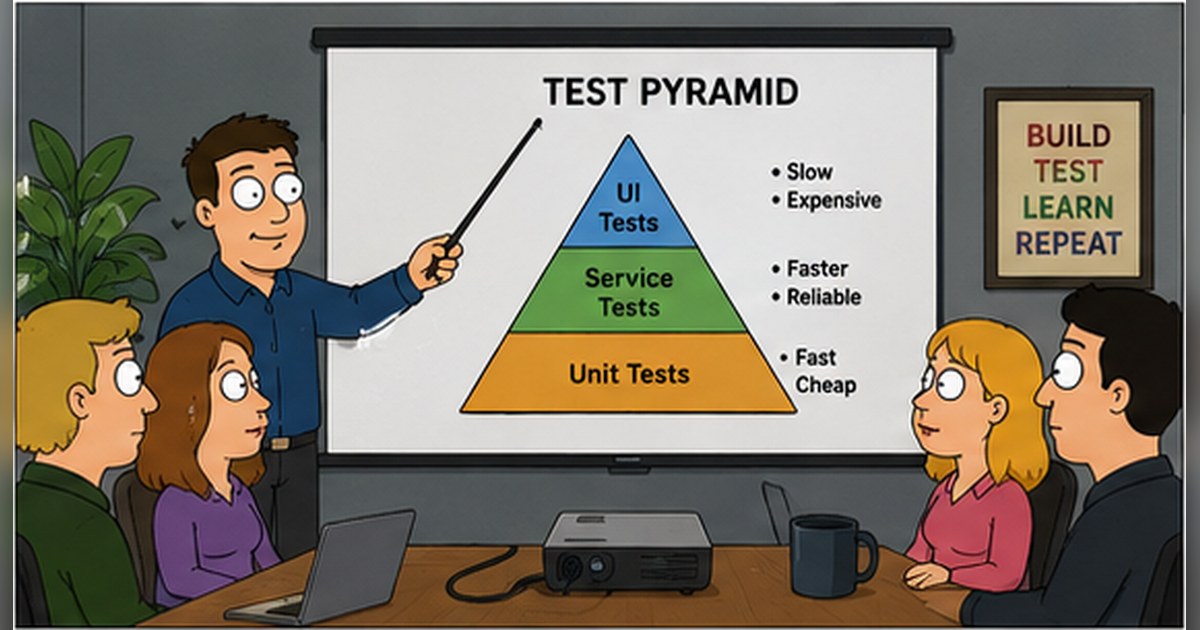
This distinction matters because a platform’s breadth changes its maintenance burden. A broader platform can reduce tool sprawl, but it also creates more process work: ownership rules, naming conventions, folder hygiene, tagging, execution policy, and how failures are triaged across test types. A narrower browser-first platform can feel simpler at the start, but a team still has to decide what happens when browser tests become the default answer for problems that should have been handled at the API or service layer.
Where Katalon tends to fit better
Choose Katalon when the team needs more than no-code browser test authoring.
1) Governance-heavy QA organizations
If your QA process includes review gates, shared ownership, release approvals, and reporting across multiple test layers, Katalon’s broader scope is a better match. The product context supports browser, API, visual, and mobile testing, which makes it easier to establish a single quality program rather than managing separate tools for each surface.
That matters because governance-heavy teams usually need answers to questions like:
- Who is allowed to create tests?
- Who reviews updates to critical flows?
- Which failures block release, and which are informational?
- How do browser failures relate to API regressions or visual diffs?
A broader platform gives you a better chance of answering those questions in one place, even if the operating model takes more discipline to maintain.
2) Teams that do not want browser tests to be the whole strategy
Browser tests are important, but they are not a substitute for every other layer. If you are trying to verify authentication, service contracts, or business logic, a browser-only strategy creates unnecessary maintenance work because the same assertion gets repeated through the UI.
Katalon is the better fit when you want to keep browser tests in their proper role, one layer in a broader test strategy.
3) Teams that expect platform consolidation pressure
Many organizations eventually need fewer tools, not more. If your evaluation includes the cost of onboarding, reporting, and ownership across multiple QA surfaces, Katalon’s wider feature set can reduce tool fragmentation. That is not free. It shifts work into platform governance, but it may still be the cheaper long-term move for a centralized QA function.
Where Autify tends to fit better
Choose Autify when the immediate problem is faster no-code browser test creation and the team wants a lighter workflow.
1) You want the shortest path from flow to runnable test
Autify’s value proposition is simpler to evaluate: browser-focused, no-code automation with AI assistance. If your current bottleneck is that manual QA flows take too long to encode, a narrower product can shorten the path from idea to execution.
That is especially useful for teams where the author is not the same person who will maintain the suite later. A lightweight authoring model lowers the barrier to getting the first version into review.
2) Your maintenance concern is mostly browser drift
If your biggest pain is locator changes, duplicated paths, and UI churn, a browser-first tool can be enough. The key is that you still need a maintenance discipline: naming conventions, stable test data, change review, and a policy for when to rewrite versus patch a flow.
Autify can reduce friction at the authoring layer, but it does not remove the underlying maintenance question. If your team does not have a review workflow, even a clean no-code interface can turn into a pile of hard-to-audit browser steps.
3) Your team wants less platform surface area
A narrower tool can be easier to operationalize. Fewer test types often means fewer debates about where a check belongs, who owns it, and which pipeline it should run in. For teams that want browser coverage without turning QA into a platform program, Autify is the more direct choice.
Hidden maintenance work each platform can create
No-code tools do not eliminate maintenance. They change what the maintenance looks like.
Katalon’s hidden work
Katalon’s broader scope can create several maintenance traps:
- Governance overhead - more test types means more rules, more reviewers, and more ways to misclassify a failure.
- Ownership ambiguity - browser, API, visual, and mobile checks can drift into separate mini-programs unless someone owns the overall structure.
- Platform sprawl inside the platform - broad capability can encourage teams to use the tool for every problem, which leads to duplicated coverage and noisy suites.
- Process coupling - the broader the platform, the more likely that upgrades, execution configuration, and environment setup become shared dependencies.
That does not make Katalon a bad choice. It means the tool rewards teams that are already ready to manage a testing program, not just create a few tests.
Autify’s hidden work
Autify’s narrower focus can reduce setup complexity, but it comes with its own risks:
- Browser suite dependence - if the team treats browser flows as the only quality signal, failures become harder to interpret and slower to diagnose.
- Limited scope pressure - teams may force the platform to cover scenarios that would be better handled at a lower layer.
- Review discipline still required - simpler authoring does not solve flakiness, test data management, or approval workflow.
In short, Autify can save time at creation, but the team still needs a rule for what belongs in a browser test and what does not.
A practical selection rubric for QA leads
If you are making the decision for a team, I would use this sequence:
Pick Katalon if most of these are true
- You need browser, API, visual, or mobile coverage in one platform.
- Your QA process has formal review or release governance.
- You want fewer tools to stitch together across the quality stack.
- You have someone who can maintain standards for naming, ownership, and test organization.
- You expect your automation program to grow beyond browser smoke tests.
Pick Autify if most of these are true
- Your immediate goal is browser test authoring speed.
- You want a simpler no-code workflow that non-specialists can use.
- Your testing needs are mostly browser-centric.
- You prefer a narrower tool that reduces platform overhead.
- Your team is willing to keep test scope disciplined so browser automation does not become a substitute for every other validation layer.
Example of the maintenance split in a browser flow
The same login flow creates different maintenance questions depending on the platform strategy.
// Example of the kind of browser check teams often want to keep stable
import { test, expect } from '@playwright/test';
test('user can sign in', async ({ page }) => {
  await page.goto('https://example.com/login');
  await page.getByLabel('Email').fill('qa@example.com');
  await page.getByLabel('Password').fill('secret');
  await page.getByRole('button', { name: 'Sign in' }).click();
  await expect(page.getByRole('heading', { name: 'Dashboard' })).toBeVisible();
});
A no-code platform is trying to make that same intent easier to author and maintain. The question is not whether it can create the flow. The question is how much review work remains after the flow exists.
For a governance-heavy team, that check may need tagging, review, and a release policy. For a faster no-code team, the same check may only need a lightweight approval path, but it still needs one.
Who should choose what
Choose Katalon if…
- You are building a managed QA program, not just a browser test set.
- You need multiple testing surfaces in one platform.
- You care about governance, reviewability, and long-term ownership structure.
- You want to reduce tool fragmentation across QA.
Choose Autify if…
- Your team wants faster no-code browser authoring.
- The immediate problem is creating and maintaining browser flows with less friction.
- You do not need the wider platform scope that Katalon offers.
- You want to keep the operating model lighter and more focused.
Final verdict
For governance-heavy teams, Katalon is the stronger fit because its broader testing surface aligns better with centralized QA ownership and multi-layer quality programs. It creates more platform work, but that work is often acceptable, even desirable, when governance matters.
For teams optimizing for faster no-code browser authoring, Autify is the cleaner choice. It is easier to justify when the goal is to get browser automation moving quickly without adopting a broader testing platform.
If I had to compress the comparison into one sentence, it would be this: Katalon is the better strategic platform, Autify is the better tactical browser authoring choice.
FAQ
Is Katalon better than Autify for every QA team?
No. Katalon is better when you need broader coverage and governance, but Autify can be the better choice if browser authoring speed is the main requirement.
Does Autify replace the need for manual QA?
No. It can reduce the cost of browser automation, but you still need decisions about what to automate, what to review manually, and how to handle test data and flaky flows.
Which tool is easier for non-engineers to start with?
Autify is usually the more natural fit when the team wants a narrower, no-code browser workflow.
Why does platform breadth matter in test automation?
Because broader coverage can reduce tool sprawl, but it also increases governance, ownership, and maintenance work. The right choice depends on whether your team can support that extra structure.
Should a team use browser tests for everything?
Usually not. Browser tests are valuable for critical journeys, but pushing every check into the UI layer increases maintenance and makes failures harder to diagnose.